

Taxes and current expenses in Thailand are rarely discussed when buying real estate, although they affect the overall economy of ownership more than it seems. For many, the picture is simplified: "if you buy an apartment, you pay a small tax once a year." In practice, everything consists of the ownership tax, utility bills, regular maintenance, repairs, and insurance.
Ownership tax
Land & Building Tax is still perceived by many by analogy with European taxation models. In Thailand, the logic is different: the tax is calculated not from the market price, but from the estimated value set by the Treasury. It is almost always lower than the market, and this is felt, especially in tourist areas like Phuket, where market prices are rising faster than the estimate is updated.
The rate depends on the destination:
- main housing – 0.02–0.1 %;
- other residential real estate – 0.02–0.3 %;
- commercial facilities – about 0.3 %;
- vacant land – 0.3% with a regular increase every three years.
The problem faced by newcomers: they buy an apartment, plan to live on their own, but due to the fact that they did not register in the house register until January 1 next year, the benefit does not apply, and the tax is calculated at the full rate. This is a standard situation – in practice, it comes up almost every year.
Utility bills: why real amounts are higher than expected
Electricity is the main cost point for utilities. The climate sets its own rules: air conditioners work almost continuously. Bills of 3,000–6,000 baht per month are common in condominiums. In villas, this figure is growing multiple times: swimming pool, pumps, washing machines, several split systems.
Water is cheaper – 15-30 baht per cubic meter, but if a person has a house with a garden, the costs are greatly increased for watering and pool maintenance. The purchase of drinking water is usually added here, since in Thailand it does not come from the tap, as in Russia or Europe.
The Internet is cheap and stable – 400-700 baht. But if the property is rented out, you have to choose a tariff with increased speed: tenants react to the quality of communication much more emotionally than to electricity tariffs.
Annual maintenance: mandatory and hidden costs
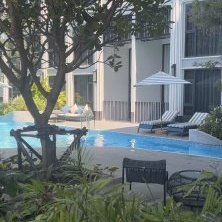
The condominiums have an annual maintenance fee. It is calculated by area – about 40-80 baht per square meter per month, but it is usually paid a year in advance. To some, this amount seems like a small thing, but for large facilities with a lot of infrastructure (swimming pools, gyms, security, parking), the fee is higher. In practice, a situation often occurs: a person buys an apartment under construction, considers profitability, and then is surprised that maintenance in an already completed complex turned out to be more expensive than originally announced – developers adjust the estimate for actual costs.
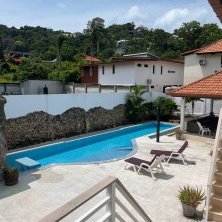
The situation is different for villas: regular garden maintenance, pool maintenance, and the departure of a master for minor household issues. This is not critical for permanent residence, and if a house is bought as an investment, the cost of service management significantly reduces the net return.
Repairs: what to budget for the owner
The tropical climate has its own specifics: humidity, heat, sudden change of seasons. In 1-2 years, mold appears in hard-to-reach places in the apartment, fittings become loose, and air conditioners require regular cleaning. If the owner comes only for the season, repairs accumulate in the background and "come out" immediately.
In 2026, the average prices for apartment repairs in Phuket look like this:
- economy level – from 1,500 baht per square meter;
- average – from 5000;
- premium – from 10,000.
Insurance: a rare but critical item
When choosing insurance, you need to look not at its cost, but at the maximum amount of coverage. In Thailand, it is divided into four parts:
- structural (walls, floors);
- finishing and engineering;
- furniture and appliances;
- personal items.
Different brokers have different package contents. For example, a hurricane or burglary is usually enabled by default, but a flood is not. This is an important nuance: it happened that after a heavy downpour, water poured from the roof, but this was not considered an insured event, because the damage did not fit the wording "flooding". For apartments in condominiums, only the property is insured, not the building itself – this is the responsibility of the management company.